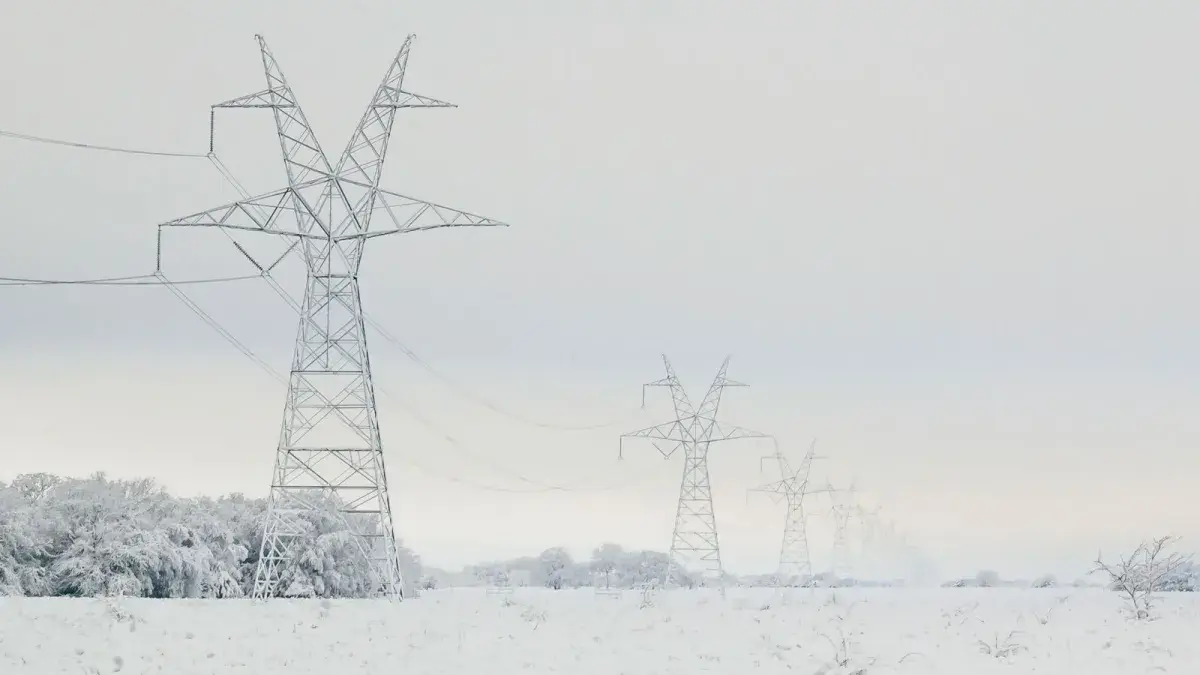
What Texas 2021 Taught Us
For most people, critical infrastructure is like background noise. We move through our days assuming the lights will always turn on, the clean water will always flow, and the network will always connect. We treat our modern utilities as if they are indestructible laws of nature, woven permanently into the fabric of society.
But our foundational networks are actually riding on incredibly thin margins. If you want proof of how quickly a modern, high-tech society can step backward into the dark ages, you only have to look at What Texas 2021 Taught Us. It stands as a stark, modern case study in just how brittle our engineered world has become.
In February of 2021, a severe winter storm swept across the central United States, plunging temperatures to historic lows. What followed in Texas was not just a weather emergency; it was a near-fatal systemic crisis that brought the independent Texas energy interconnection to the absolute brink of a total blackout. Because the system’s infrastructure had not been properly winterized, the dominoes began to fall with terrifying speed.
Natural gas lines froze, preventing fuel from reaching power plants. Wind turbines stalled under thick sheets of ice. At the exact moment citizens cranked up their thermostats to stay warm, generation capacity plummeted off a cliff. To prevent a physical, catastrophic overload that could have damaged the entire grid for months, grid operators had to shed load instantly. It wasn’t just a localized inconvenience; it was a massive infrastructure failure that left over 4.5 million homes in freezing darkness and resulted in more than $130 billion in economic fallout.
The true lesson of the Texas freeze, however, wasn’t about the cold weather; it was about the cascade effect. We often look at our world in silos, believing that electricity, water, communications, and transport are separate entities. Texas proved they are all inextricably linked.
When the power dropped, municipal water treatment facilities instantly lost pressure, leaving entire cities without running water. Because there was no electricity, natural gas could not be pumped to keep the remaining generating stations alive, creating a vicious, self-defeating loop. Cellular towers exhausted their backup batteries within hours, cutting off emergency communications and blinding local authorities. Within 48 hours, citizens in one of the most economically powerful, energy-rich regions on Earth were forced to boil snow over open fires just to secure clean drinking water.
This historic failure exposed the core reality of grid fragility. It bridged the gap between theoretical future risks and the raw psychological anxiety we all carry today. The modern emotional landscape is deeply shaped by these shared disruptions. When we worry about cyberattack fears, supply chain collapses, geopolitical instability, or extreme weather events, we are reacting to a newly uncovered truth: our systems are hyper-connected, but entirely unsupported.
The hard data backing this up is incredibly sobering. The average age of a high-voltage transformer in our electrical grid is over 40 years old. These are massive, custom-built machines that cannot be bought off a shelf; their replacement lead times can stretch from one to two years under normal conditions, and the global supply chains for these components are severely strained. We are trying to run a tomorrow built on hyper-automation, artificial intelligence, and digital dependency on top of a physical foundation that is old, tired, and structurally decaying.
Navigating this reality requires a specific kind of crisis leadership. We have to stop thinking like bureaucratic managers and start thinking like executive strategists. We must look at our businesses, our communities, and our national frameworks through the lens of cascading failure. When we look back at historical failures like the Texas freeze, the message is clear: true security isn’t achieved by building more complex technology or adding another layer of digital optimization. True security is about building deep, physical redundancy and preserving our human ability to adapt and survive when the technology disappears.
The grid is more fragile than we think, but it is entirely fixable if we choose to face the vulnerability. To understand the hidden webs that tie our technology together, grab your copy of my book ‘’Black Sky future’’ from Amazon or any other major book retailer and join the executive conversation on national resilience.