The Hidden Dependency of Always-Connected Systems
We live in an era of pure digital magic. With a single tap on a glass screen, you can route money across the globe, track a delivery vehicle in real time, or hand over your daily schedule to an artificial intelligence assistant. It feels seamless. It feels invisible. We look at our sleek smartphones, our autonomous software, and our lightning-fast cloud networks, and we naturally assume that this hyper-efficient architecture is permanent. We mistake complexity for strength.
But behind this sleek interface lies a messy, deeply fragile reality I like to call “infrastructure spaghetti.” In our relentless pursuit of corporate efficiency, maximum convenience, and lightning speed, we have systematically traded away our analog safety nets. The result is a massive, opaque web of always-connected systems that are deeply vulnerable to a single point of failure. By optimizing everything for the short term, we have inadvertently engineered a civilization with an alarmingly short structural battery life.
When we think about modern societal risk, our minds usually drift to cinematic, isolated disasters like a single localized blackout, a temporary software bug, or an isolated storm that knocks out a neighborhood for an afternoon. But the true threat facing us isn’t a single local glitch; it’s the terrifying reality of a cascading systems failure.
Consider what I call the Interdependency Trap. We mistakenly conceptualize our world in isolated silos: electricity is handled by the utility company, communication is managed by the telecom giant, and logistics are run by shipping firms. In reality, these sectors are locked in an inseparable, circular embrace where the failure of one automatically induces a breakdown across all the others.
Your favorite smartphone app or corporate database relies entirely on cloud servers. Those servers require massive electrical grids to stay cool and powered. The electrical grid relies on digital communication networks and automated SCADA systems to balance its volatile power loads. And those vital communication networks? They require continuous electricity from the grid to keep their arrays alive. If you pull just one thread from this highly integrated sweater, the entire system unravels in a matter of hours.
This isn’t a hypothetical, doom-and-gloom scenario cooked up by fringe conspiracy theorists. I don’t write like a doomsday prepper, because the actual data is alarming enough on its own. The emotional psychology of our time is already deeply shaped by these shared disruptions. We don’t need to imagine a collapse; we have already felt the tremors firsthand.
Over the last few years, we have collectively experienced the anxiety of supply chain collapses that left grocery shelves bare, growing cyberattack fears targeting regional infrastructure, random internet outages that froze point-of-sale systems across multiple continents, and the creeping realization that our massive AI dependency has hollowed out basic human capability. We are starting to sense, on a primal level, just how thin the ice is beneath our feet.
When always-connected systems blink out, the dominoes fall with brutal, mathematical certainty:
- Hour 1: The local power grid fails due to a cyberattack, extreme weather, or space weather, immediately dropping major transmission nodes.
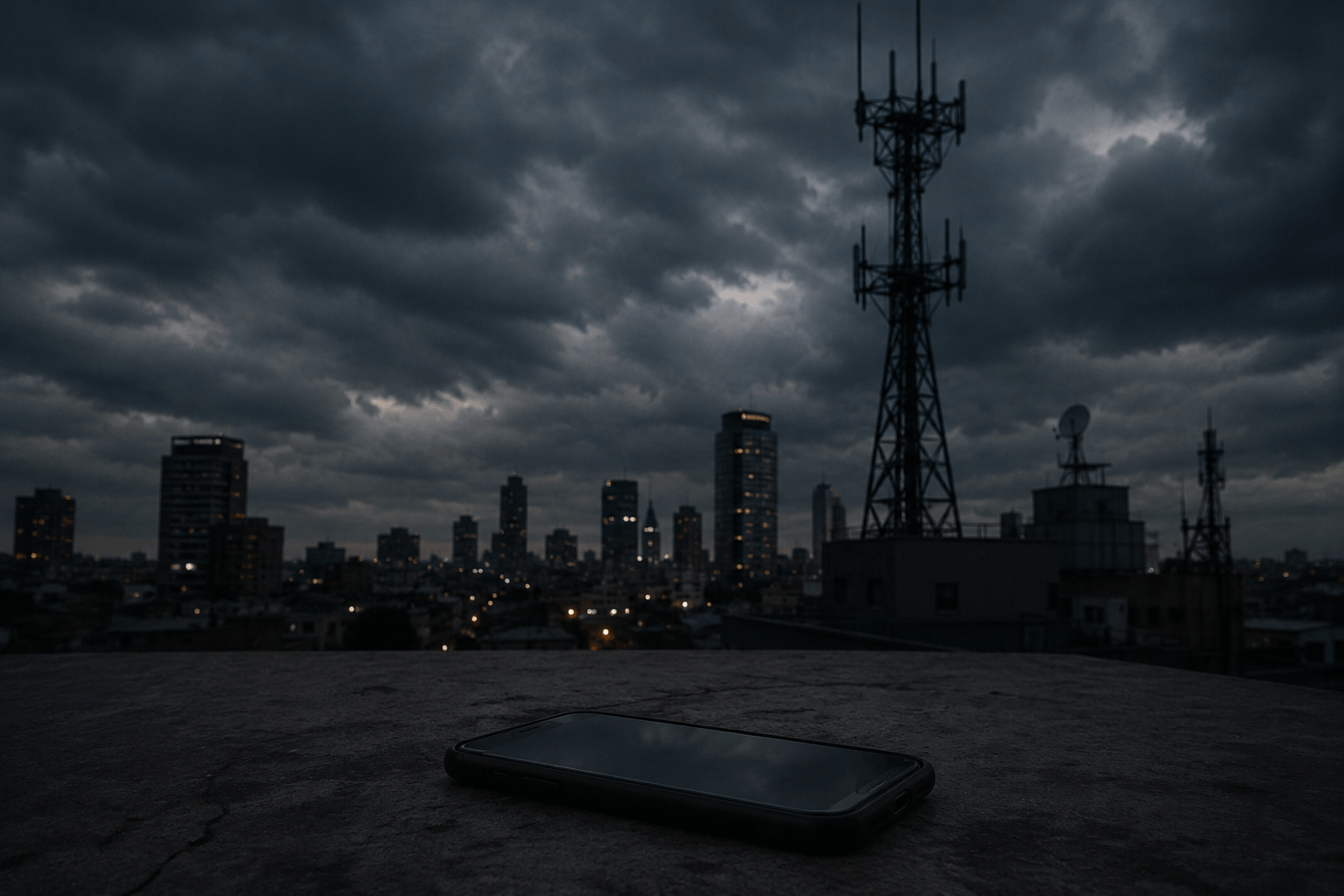
- Hour 4: Cellular towers exhaust their integrated backup batteries and go dark, severing the digital nervous system and blinding emergency operators.
- Hour 12: Water pressure drops precipitously across major residential sectors because municipal water treatment pumps lose their electrical drive.
- Hour 24: Digital banking networks, payment gateways, and just-in-time logistics freeze entirely; the automated barcodes stop scanning and fuel trucks cannot pump gasoline.
Within 96 hours, a modern metropolitan area transitions from a pinnacle of high-tech luxury into a severe humanitarian crisis. This is the silent propagation of a Black Sky event—a catastrophe that systematically dismantles the lifelines we take for granted.
As someone who spends my life studying national security, infrastructure risk, and crisis leadership, I believe we cannot afford to look away from these systemic vulnerabilities. The goal of understanding this cascade isn’t about fostering paralyzing fear or selling survivalist paranoia. It is about building an operational blueprint for resilience.
True crisis leadership means looking directly at the “infrastructure spaghetti” and intentionally re-engineering redundancy back into the loop. We must demand that our corporate leaders look beyond short-term pricing optimization to invest in localized microgrids, off-grid communication loops, and manual fallbacks. We need to re-learn how to step back into the analog world, preserving the human knowledge required to change grid states by hand when the digital network disappears. True security is not achieved by building faster networks, but by ensuring we can survive when those networks choose to sleep.
Want to dive deeper into how this structural fragility impacts our daily lives and see a real-world example of the cascade in action? Then grab your copy of my book ‘’Black Sky future’’ from Amazon or any other major book retailer and explore the full executive breakdown of these cascading infrastructure risks.